Wildlife & Nature
Jungle Walks in Chitwan National Park, Nepal
Explore the pristine sal forests, grasslands, birdlife, and remarkable wildlife of Nepal’s Chitwan wilderness on a guided nature walk.
Himal Shahi Thakuri · Oct 26, 2026 · 8 min read
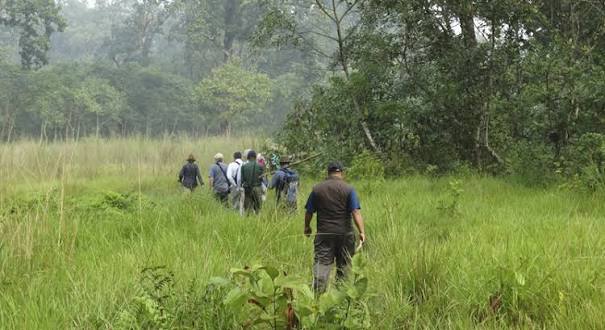
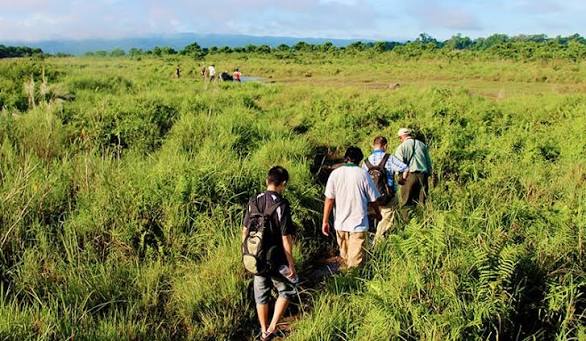
Walking beneath the sal forest canopy of Chitwan National Park reveals the beauty and biodiversity of Nepal’s Terai wilderness. · Google
Jungle Walks in Chitwan National Park, Nepal
Imagine walking beneath towering trees as sunlight filters through the leaves, birds call from the canopy, and the forest floor reveals traces of wildlife moving through the wilderness. In Nepal’s southern Terai, jungle walks in Chitwan National Park offer an opportunity to experience nature at a slower pace and understand a landscape renowned for its remarkable biodiversity.
Unlike a conventional sightseeing trip, a jungle walk encourages visitors to observe the details of the forest. The experience may include identifying birds, learning about native trees, interpreting animal tracks, and discovering how different habitats support wildlife. Every walk is different because the forest changes with the seasons, weather, and movements of its inhabitants.
Established in 1973, Chitwan National Park was Nepal’s first national park and became a UNESCO World Heritage Site in 1984. Its landscape includes sal forests, grasslands, wetlands, riverine forests, and floodplains. Together, these habitats support an extraordinary variety of plants and animals.
What Makes Jungle Walks in Chitwan Special?
A guided jungle walk offers a perspective that visitors may miss when travelling through the landscape by vehicle. Walking allows time to listen, observe, and understand the natural environment without rushing between destinations.
The sounds of insects, the movement of leaves, and the calls of birds reveal how active a forest can be, even when large animals remain hidden. A knowledgeable guide can explain the relationship between vegetation, soil, water, and wildlife, helping visitors recognise the ecological importance of seemingly ordinary details.
The experience is not simply about finding animals. It is about learning how they live, how they use their habitats, and why protecting these environments matters.
Walking activities must take place through authorised arrangements and follow current park regulations. Visitors should confirm the permitted route and safety requirements before booking.
Discover the Sal Forest
The sal tree, scientifically known as Shorea robusta, is one of the defining trees of Chitwan’s forest landscape. Its tall trunk and spreading canopy create shaded environments where fallen leaves, roots, smaller plants, and decomposing vegetation form part of a complex ecosystem.
As visitors walk beneath the trees, a guide may explain how plants provide food and shelter, how organic material contributes to soil health, and how forest structure influences the animals living there.
Seasonal changes also shape the experience. Rainfall, temperature, and sunlight influence vegetation growth and the availability of food and shelter. The forest is never completely static; it changes continuously as plants grow, leaves fall, and animals move through their surroundings.
Exploring Grasslands and Wetlands
Chitwan is not made up entirely of dense forest. Its tall grasslands and wetlands are equally important for wildlife conservation.
Grasslands provide feeding and shelter areas for several herbivores and grassland-dependent birds. Their edges create transition zones where forest and open habitats meet. Wetlands, rivers, and oxbow lakes support fish, amphibians, reptiles, and waterbirds.
Riverine forests develop along waterways, where soil moisture and seasonal flooding influence the vegetation. These habitats demonstrate how water shapes the wider landscape and creates conditions for different species to survive.
Depending on the authorised route, visitors may learn about these habitats and their importance to wildlife. Different areas provide different opportunities for observation, so the species encountered will depend on the location and conditions.
Wildlife You May Encounter
Chitwan National Park is internationally recognised for its wildlife. However, animals move freely through their habitats, and sightings are never guaranteed during a jungle walk.
Greater One-Horned Rhinoceros
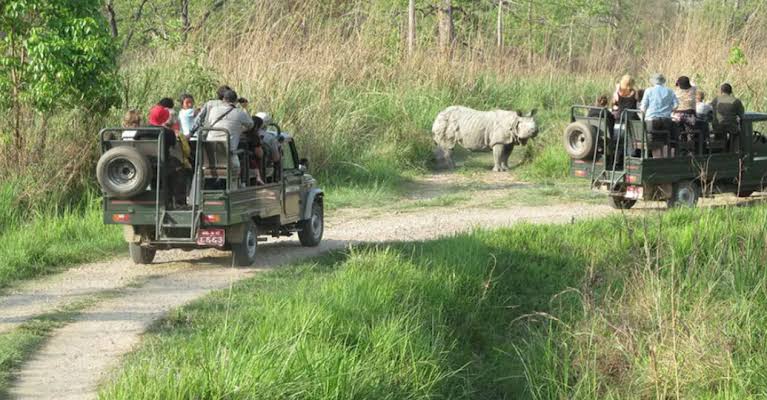
The greater one-horned rhinoceros (Rhinoceros unicornis) is one of Nepal’s best-known conservation success stories. Its distinctive single horn and thick, folded skin make it instantly recognisable.
Rhinos use grasslands, wetlands, and forest edges for feeding and other essential activities. Chitwan has played a major role in protecting this threatened species through habitat management, monitoring, and anti-poaching efforts.
Seeing a rhino in the wild can be unforgettable, but it is a powerful animal that must be observed from a safe distance under the guide’s direction.
Royal Bengal Tiger
The Royal Bengal tiger (Panthera tigris tigris) is one of the most elusive inhabitants of Chitwan’s forests. The park provides important habitat for this endangered big cat and its prey.
A guide may explain tiger ecology, territorial behaviour, tracks, and the importance of connected habitats. Seeing a tiger during a walk is uncommon, and visitors should never expect or attempt to force an encounter.
Deer, Monkeys, and Other Mammals
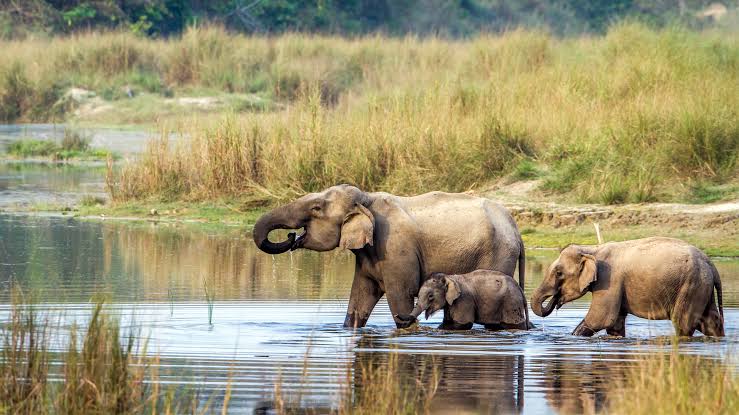
Spotted deer (Axis axis), sambar deer (Rusa unicolor), rhesus macaques, grey langurs, and wild boar inhabit different parts of Chitwan’s landscape.
Visitors may sometimes observe deer feeding, monkeys moving through trees, or signs of animal activity along a trail. These encounters offer insight into the relationships between herbivores, vegetation, predators, and the wider ecosystem.
Birdlife and Reptiles
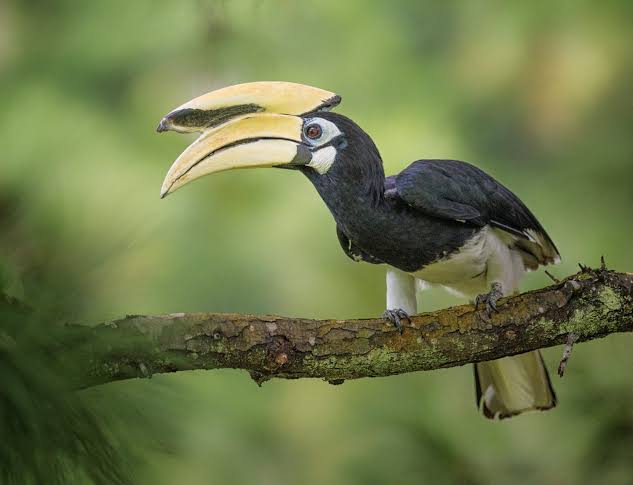
Chitwan is an outstanding destination for birdwatching, with a rich variety of resident and migratory species. Depending on the habitat and season, birds may include hornbills, kingfishers, woodpeckers, drongos, peafowl, and many others.
Wetlands and river systems also support reptiles, including crocodilians and freshwater turtles. The gharial (Gavialis gangeticus) is a critically endangered fish-eating crocodilian associated with suitable river habitats, while the mugger crocodile (Crocodylus palustris) occurs in a broader range of freshwater environments.
These animals are not guaranteed sightings on a jungle walk. Observations depend on the activity, habitat, and natural behaviour of the species.
Learning to Read Animal Tracks
Some of the most interesting discoveries in the forest are the signs wildlife leaves behind. Footprints in soft soil, marks on trees, feathers, droppings, and disturbed vegetation can provide clues about animal activity.
An experienced guide can explain how to interpret these signs and why they require careful observation. Tracks may become distorted by rain or other animals, so a single footprint does not always reveal precisely when an animal passed.
Learning to recognise wildlife signs changes the way visitors experience the forest. Even without seeing a large mammal, they can begin to understand how animals use the landscape throughout the day and night.
The Best Time for a Jungle Walk
October to March generally offers more comfortable temperatures for outdoor activities in Chitwan. The post-monsoon landscape can remain green, while cooler mornings are often pleasant for nature observation and birdwatching.
April to June can be extremely hot in the Terai, so visitors should follow their guide’s advice about suitable times and preparation.
July to September brings the monsoon, with heavy rainfall, lush vegetation, and changing river and trail conditions. Some routes may become inaccessible or activities may be restricted.
The best time depends on current weather, authorised routes, and park regulations. Confirm availability with your operator before travelling.
What to Bring
Prepare for your walk with comfortable closed footwear, lightweight clothing, drinking water, sun protection, and insect repellent. Binoculars are useful for birdwatching, while a camera can help capture the landscape without disturbing wildlife.
Stay with your guide, avoid feeding or approaching animals, and carry all rubbish out of the forest. Never collect plants or wildlife, and do not enter the park on foot without an authorised arrangement.
Chitwan is a natural habitat, not a controlled wildlife display. Visitors should remain alert, respect instructions, and understand that every wildlife activity involves some degree of risk.
Jungle Walks and Responsible Tourism
Protecting Chitwan requires more than safeguarding individual animals. Forests, grasslands, wetlands, and rivers must remain healthy enough to support the species that depend on them.
Responsible tourism can contribute by supporting authorised local guides, respecting park regulations, and helping visitors understand conservation challenges. It can also encourage appreciation for local knowledge and the communities living around protected areas.
Before booking, confirm whether your proposed walk takes place inside the national park, in the buffer zone, or in a community-managed area. These locations can have different rules and access arrangements.
For official information, consult the Chitwan National Park website and the Nepal Tourism Board’s Chitwan guide.
Frequently Asked Questions
Can I see a rhinoceros during a jungle walk?
It is possible, but sightings are never guaranteed. Visitors must follow their guide’s instructions and maintain a safe distance from wildlife.
Can visitors see tigers on foot?
Tigers inhabit Chitwan, but they are elusive, and sightings during walking activities are uncommon.
Is a jungle walk the same as a jeep safari?
No. A jungle walk focuses on exploring an authorised route on foot, while a jeep safari covers a larger area by vehicle. Each offers a different experience.
Is a jungle walk suitable for everyone?
Suitability depends on physical ability, age, route conditions, weather, and the operator’s arrangements. Discuss your needs with the guide before booking.
How long does a jungle walk take?
The duration depends on the route and operator. Confirm the expected distance, walking time, and inclusions before making a reservation.
Conclusion
Jungle walks in Chitwan National Park offer a meaningful way to experience Nepal’s natural heritage. Beneath the sal trees, across grassland edges, and near the rivers and wetlands, visitors can discover the complexity of an ecosystem that supports remarkable wildlife.
The most rewarding walk is not necessarily the one with the greatest number of animal sightings. It is the one that encourages careful observation, a deeper understanding of nature, and respect for the wilderness.
Chitwan’s forests are more than a destination for adventure. They are living ecosystems that deserve protection for future generations.
Experience the forest responsibly, learn from its wildlife, and leave the wilderness undisturbed.