Wildlife & Conservation
Gohoro: The Monitor Lizards of Nepal, Their Myths and Their Fight for Survival
Himal Shahi Thakuri · Oct 26, 2026 · 19 min read
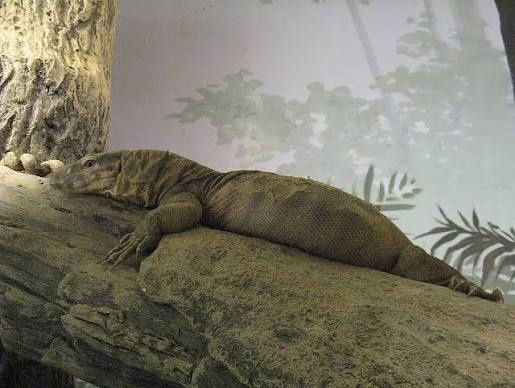
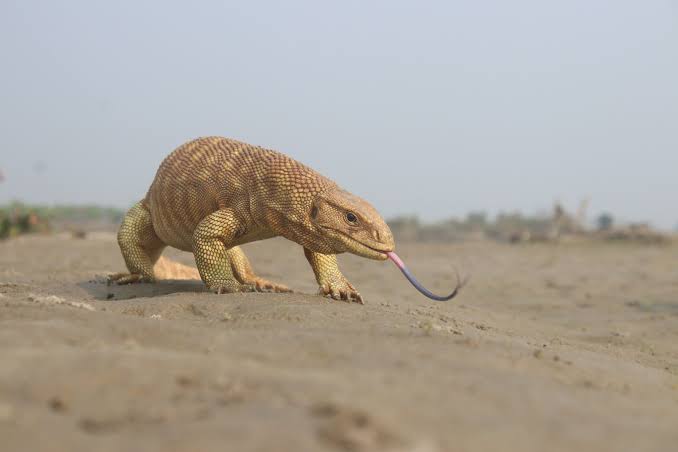
Walk along a canal, a field edge or a patch of forest in Nepal’s Terai on a warm morning, and you may see a long, dark shape slip through the grass and vanish up a tree or into a burrow. Many people react with fear, and some with a stick. In Nepali this animal is called Gohoro (गोहोरो), or Goh (गोह) for short. It is a monitor lizard, and it is one of the most useful, most persecuted and least studied reptiles in the country.
Monitors do not get the attention that tigers, rhinos or snow leopards do. They are not rare enough to be famous or beautiful enough to be on posters. Yet researchers say that at least some of Nepal’s monitor lizards are in trouble. People kill them out of fear. They are hunted for meat and skin, and their body parts are sold on the basis of old myths and new scams. Most of their habitat lies outside protected areas, on farmland and village edges, where they get little legal or practical protection.
This article explains what a Gohoro really is. It covers the species found in Nepal, how they live, why they matter to the ecosystem, which beliefs about them are true and which are false, and what threatens them. It also covers what the law says and what ordinary people can do. Where possible, the facts come from field studies in Nepal, government and conservation sources, and recent reporting. Sources are listed at the end.
A Lizard With Many Names
The word Gohoro is used across much of Nepal for large lizards of the monitor family. Goh (गोह) is a shorter, widely understood form. The yellow monitor has its own name in some references, Sun Gohoro, meaning golden Gohoro, a reference to its yellow-flecked body.
Names for monitors vary across South Asia, and the variety shows how long people have lived alongside them. In the wider region the Bengal monitor is known by names such as goh in Punjab and Bihar, goyra in Rajasthan, guishaap or goshaap in Bangladesh and West Bengal, ghorpad in Maharashtra and thalagoya in Sri Lanka. In western India it has even been called bis-cobra, a name that reflects a false belief that it is as dangerous as a snake.
That last name matters. Throughout the region, the monitor’s long body, strong claws and flickering tongue have led people to confuse it with snakes or to credit it with powers it does not have. The animal is neither a snake nor a dragon. It is a reptile with a specific place in the food web, and most of what makes it feared is misunderstanding.
What Is a Monitor Lizard?
Monitor lizards belong to the family Varanidae and the genus Varanus. Scientists have counted somewhat different totals over the years, from roughly 58 species in one listing to about 77 in another, and 73 in a 2010 review, with the number shifting as taxonomy changes. The family includes the world’s largest living lizard, the Komodo dragon of Indonesia, and many smaller species across Africa, Asia and Australia.
Monitors share a recognisable body plan. They have long necks, strong limbs, sharp claws, muscular tails and a long forked tongue that flicks in and out to pick up scents from the air, much as a snake’s does. Their heads can turn freely on a flexible neck. They are active, alert hunters, and many species are known for being intelligent and curious compared with other reptiles.
All monitors lay eggs. Females usually bury them in burrows, in soft soil, in rotting logs or in termite mounds. Young monitors are often more colourful than adults and can look quite different from them, which sometimes causes confusion about species. Adults can live for a decade or more in the wild.
Monitors are generalist predators. They eat insects, spiders, snails, frogs, small reptiles, birds, eggs, rodents and carrion. This adaptability helps them live in many habitats, from river valleys and forests to farmland and the edges of towns. It is also the reason they sometimes come into conflict with people, a point we return to later.
The Monitors of Nepal
Nepal is not a big country for monitor diversity. Only two species have been recorded and legally protected here in the standard literature, the Bengal monitor (Varanus bengalensis) and the yellow monitor (Varanus flavescens). A third species, the Asian water monitor (Varanus salvator), appears in some regional range descriptions that include Nepal, but I found little detailed, reliable information on it in Nepal, so this article does not cover it in depth. If you have local records or photographs of large, semi-aquatic monitors in the eastern or central Terai, they would be valuable to researchers.
The two main species differ in appearance and habits, though they overlap in places. A study in the Kanchanpur district of far-western Nepal found that the two species were partially separated in habitat. The Bengal monitor was closely associated with large trees, while the yellow monitor was found more in wetter, open areas. Both are carnivorous, and the same study noted that they use almost the same resources, which makes it important to understand how they share space.
Nepal’s wildlife authorities have also noted that the yellow monitor is found in the Terai’s protected areas and in the forests near them, usually close to water. Both species can often be found around farmland, canals, ponds and village edges, which puts them in close contact with people.
The Bengal Monitor: The Common Gohoro
The Bengal monitor (Varanus bengalensis), also called the Indian monitor or common monitor, is the species most people in lowland Nepal mean when they say Gohoro. It is one of the most widely distributed monitor lizards in the world. Its range runs from eastern Iran and Afghanistan through Pakistan, India, Nepal, Bangladesh and Sri Lanka to Myanmar. Biologists have recently split related populations in Southeast Asia into a separate species, the clouded monitor, so the true Bengal monitor is mostly found west of Myanmar.
In Nepal, a recent report from the state-run Rising Nepal described the Bengal monitor as widely distributed across the lowlands and also found in some mid-hill regions. Chitwan National Park, the country’s first national park, is one of its best-known strongholds, and the species also lives in other parks and across agricultural landscapes. Adults are commonly described in Nepali sources as about 75 to 100 centimetres from snout to tail tip, although individuals of other populations are known to grow larger.
Its body is dull brown to grey, often with a pattern of darker bands or spots, while younger animals tend to be more strongly marked. It has a slender, pointed head, a long neck and a long tail. It spends time on the ground and in trees, and it is very good at using holes and burrows. Researchers have noted that it will use abandoned termite mounds, which are cool in summer and safe from predators.
The Bengal monitor eats whatever it can catch. Its diet includes invertebrates such as beetles and crickets, and vertebrates such as frogs, lizards, small birds, rodents and eggs. It will also eat carrion. This makes it a quiet helper of farmers, because rats, insects and other crop pests are on its menu. It can also raid poultry for eggs and chicks, which is the main reason farmers dislike it.
According to ecologist Hem Bahadur Katuwal, quoted in the Rising Nepal report, hunters take the Bengal monitor for skin and meat, and other threats include habitat loss, agrochemicals and roads. The same report notes that people hunt it for skin, for food and for medicine, and that myths and superstitions linked to monitors expose them to human-wildlife conflict and to wildlife trafficking.
The Yellow Monitor: Nepal’s Golden Gohoro
The yellow monitor or golden monitor (Varanus flavescens) is smaller, more colourful and much less studied. It is a medium-sized monitor, typically between 45 and 95 centimetres including the tail. Its body is dark brown above with yellow flecks and a yellow underside, which gives it the golden look behind its name. Nepal’s Department of National Parks and Wildlife Conservation describes it as living in forests near water sources and found in the Terai protected areas and nearby forests.
Globally, the yellow monitor lives on the flood plains of the Indus, Ganges and Brahmaputra rivers in India, Pakistan, Nepal and Bangladesh. It prefers wet areas, forest edges and farmland, and it is often found close to human settlements. It is a good swimmer. One report describes a yellow monitor in a wetland alternating between swimming upright and floating motionless, and another describes one lying on a pile of hot ash left by a campfire, apparently to warm itself. Little observations like these show how much is still unknown about its behaviour.
What we do know about its conservation is worrying. In a study of the south-eastern part of Kanchanpur district, researchers found that direct killing was the major threat, driven largely by fear and a lack of knowledge about the animal. A survey of four areas of Chitwan found the species present in all of them, mostly on agricultural land, and concluded that illegal hunting for meat and skin, along with habitat degradation and disturbance, especially in patchy forests next to farmland, were the most significant threats.
A literature review by researchers at Kathmandu Forestry College noted that the species has been exported illegally through northern Nepal to China, where its skin is used in traditional Chinese medicine, and that hides have been seized from smugglers at checkpoints. Field researchers working at the Jagadishpur reservoir, a Ramsar wetland site in the Terai, have described the yellow monitor as a low priority for research and enforcement even though habitat loss, poaching and the conversion of land to crops have contributed to falling numbers.
The yellow monitor also has a low population density even in its preferred habitat. Limited studies suggest that it is declining, although more research is needed to confirm the trend. Most of its potential habitat lies outside protected areas, and creating more parks alone will not be enough to save it.
One note of caution on its global status. Nepal’s wildlife department lists it as an endangered species on the IUCN Red List and in Appendix I of CITES, and as a protected species in Nepal. Older sources describe the IUCN category as lower risk, and different databases may differ. Always check the current IUCN Red List entry before quoting a category, because assessments are updated over time.
Where Gohoro Live, and Why Farmland Matters
One of the most important lessons from Nepal’s monitor research is that these animals do not live only in forests. In Chitwan, the yellow monitor was mostly seen on agricultural land. In Kanchanpur it lived close to villages. The Bengal monitor is common around fields, canals and village edges across the Terai.
This has two consequences. First, monitors need patches of cover, such as large trees, thickets, termite mounds, field margins, ponds and canals, which let them shelter, nest and move between areas. When land is cleared, drained or sprayed heavily with agrochemicals, they lose food and homes. When patches of forest become fragmented, monitors become more exposed to hunters and to road traffic.
Second, because monitors live near people, their fate depends on local attitudes. A protected area can be patrolled, but a farm field cannot. If villagers see monitors as pests, dangers or sources of income, no amount of legal protection on paper will keep them safe. If villagers see monitors as helpful neighbours, they can be one of the best protectors the species has.
What Gohoro Do for the Ecosystem
Monitors are not a charismatic species, but they do real ecological work. As mid-sized predators and scavengers, they sit in the middle of the food web. They help control populations of rodents, insects and other small animals. They eat carrion, which helps clean up dead animals. They eat the eggs and young of other animals, which can keep some populations in check, and they are in turn eaten by larger predators when young.
For farmers, this means that a monitor on or near a field is often working for them, taking rats, beetles and grasshoppers. The occasional lost chick or egg is a real cost, but it is usually small compared with the pests the lizard removes, and it can be reduced with simple measures such as closed coops and collecting eggs promptly.
Monitors also matter as indicators. A healthy population of monitors on farmland suggests that the land still has cover, prey and water, and that it is not heavily poisoned. When they disappear, it is often a sign that something else in the system has gone wrong.
Fear, Myths and Misunderstanding
If you ask people in the Terai about the Gohoro, you will hear a mix of fear, folklore and half-truths. Some people believe it is venomous in a deadly way, others that it will attack people, others that its body parts have magical or medical powers. These beliefs are one of the main drivers of killing and trade.
The best evidence on how people in Nepal feel about reptiles comes from a study of snakes rather than monitors. In a survey of 150 people living in the buffer zone of Chitwan National Park, 86 percent feared snakes, 43 percent disliked them and 49 percent said they would exterminate all venomous snakes. The researchers found that fear and ignorance were strong predictors of whether people would harm snakes. Monitors have a long body, a forked tongue and a habit of appearing suddenly, so it is reasonable to think they suffer from some of the same reaction, although that is an inference rather than a measured result.
The facts are different. Monitors are not aggressive hunters of people. Like most wild animals, they flee when they can and defend themselves when cornered. A cornered monitor can bite, scratch with its claws and lash with its tail, and any wound should be washed and treated carefully because animal bites can become infected. But there is no reason to think that a Gohoro is a deadly threat to people, and most conflicts happen because someone tries to catch or kill one.
Folk beliefs also give monitors supposed healing powers. Across South Asia, monitor fat, oil, blood, meat and organs have been sold as cures for arthritis, tuberculosis, skin problems and as aphrodisiacs. Conservation groups say that these claims have no scientific basis. They also say that believing them leads to the killing of animals that could have been left alone.
The Trade That Threatens Them: Skin, Meat and “Hatha Jodi”
Hunting for skin and meat is a major threat to monitors across their range, and Nepal is part of that picture. The skin is used for leather goods and drum coverings in some parts of the region. A reported feature of the trade is that a small piece of skin means a whole dead animal, because the skin is taken off the entire lizard, which is first caught and killed.
One of the strangest parts of the trade is the sale of so-called Hatha Jodi. This is marketed as a rare root from the Himalaya or central India that looks like two joined hands and is believed to bring good luck or power. Investigators from World Animal Protection found that many of the items sold under this name, including online, were actually dried male monitor lizard genitalia, and some were even plastic moulds. A report from wildlife conservationists in India described a trade in monitor penises, meat, blood and oil, noting that demand fuels poaching and that animals are trafficked through the Indian state of Bihar, which borders Nepal. Investigators said that the trade has become more hidden, and that some restaurants sell other meat as monitor meat when they cannot meet demand.
Researchers in Nepal have also reported the export of yellow monitor skin to China for use in traditional medicine, and the species’ skin has been offered for sale in wildlife markets. These reports are not recent, and I could not find up-to-date seizure statistics for Nepal. Even so, they show that the trade is real and that Nepal has been both a source and a transit route.
The pattern is familiar from other wildlife trades. A myth creates demand, demand creates profit, profit creates poaching, and poaching reduces numbers in a species that few people are watching. Because monitors are slow to mature and lay a modest number of eggs, populations can take a long time to recover once they fall.
What the Law Says
In Nepal, monitor lizards are covered by the National Parks and Wildlife Conservation Act of 1973. The Department of National Parks and Wildlife Conservation lists the yellow monitor as a protected species, and the Bengal monitor is also on the protected list. Researchers have noted that these are the only two monitor species among those recorded in Nepal that have legal protection.
Internationally, the yellow monitor and the Bengal monitor are both listed under CITES, the convention that regulates trade in endangered species, which makes international trade in their parts illegal without special permits. Many other monitors are listed in a less strict category, which regulates rather than bans trade.
The law is only as strong as its enforcement. Researchers working in Chitwan and the far west have called for stronger enforcement against poaching, along with adequate conservation strategies and public awareness. They stress that because so many monitors live outside parks, protecting them requires the cooperation of local communities, local governments and the police, not just park staff. I have not summarised specific penalties here because I did not retrieve the current text of the law, so check the latest version or a legal source if you need exact fines and prison terms.
Living Safely With a Gohoro
Most people who live near monitors never have a serious problem with them. A few simple habits make life easier for both sides.
Keep your distance. A monitor that is left alone will usually move away, and a monitor that is chased, grabbed or cornered is the one most likely to scratch or bite. If one wanders into a yard or house, open a door or gate, keep children and pets back, and let it leave. If it does not, call a local wildlife rescuer, the forest office or the park authorities instead of trying to catch it yourself.
Protect your poultry. Monitors raid hen houses for eggs and chicks, so a closed, sturdy coop with no gaps is the most effective answer. Collect eggs daily and avoid leaving scraps or dead animals where lizards can feed on them. This is cheaper and safer than trying to kill the animal, and it works.
Treat any bite or scratch seriously. Wash the wound with clean water and soap, seek medical advice, and make sure your tetanus protection is up to date. Do not try home remedies that involve the lizard itself.
Teach children early. Children who learn to see lizards as harmless neighbours are less likely to throw stones or join in killing. Schools, local clubs and community forest groups in the Terai are good places for this kind of education.
What You Can Do
You do not need to be a scientist to help. The most direct step is to refuse to buy or sell any product made from monitor lizard skin, meat, oil or body parts. If someone offers you a “Hatha Jodi” root or a monitor skin item, know that it is illegal and may be fake. Report suspected trade to the police, the forest office or a local wildlife crime reporting network.
You can also help by sharing accurate information. Posts that show the Gohoro as an ordinary, useful animal, not a monster, help to replace fear with understanding. If you photograph a monitor in the wild, you can upload the record to a citizen science platform such as iNaturalist, which helps researchers map where the species still lives. Because so little is known about the yellow monitor in particular, even simple sightings can be valuable. Do not post exact locations of nests or burrows, because that could attract hunters.
If you want to support organisations, look for groups that work on reptiles, wetlands and community conservation in the Terai, and ask how they involve local people and how they report their results. Small research grants have funded much of what we know about the yellow monitor in Nepal, so even modest support can make a visible difference.
The Road Ahead
The story of the Gohoro in Nepal is not a story of dramatic collapse. It is a story of slow, quiet pressure on an animal that nobody was watching closely. Fear leads to killing. Myths lead to trade. Farmland changes, roads spread and wetlands shrink. Each of these pressures is small on its own, but together they can wear down a population that has low density and slow reproduction.
There are also good reasons for hope. Nepal has a growing group of young herpetologists and conservation researchers who are surveying reptiles in places like Chitwan, Kanchanpur and the Ramsar wetlands of the Terai. New work is modelling where the yellow monitor could live under future climate and land-use scenarios, which will help planners decide where to protect habitat. The species is legally protected, and its main threats, ignorance and demand for myth-based products, are things that education and enforcement can address.
What is needed most is attention. We need better surveys to find out how many monitors there are and whether they are declining. We need stronger action against the skin and body-part trade, including online sales. And we need communities that see the Gohoro as part of their landscape, a quiet predator that eats rats and insects and has lived in these fields and forests for far longer than people have farmed them.
The next time you see a long, dark lizard crossing a path in the Terai, it is worth stopping for a moment. Watch the tongue flick, watch it test the air, and then let it go on its way. It is doing what monitors have done for millions of years, and it deserves a chance to keep doing it.
Sources and Further Reading
This article draws on a field study of the yellow monitor in Kanchanpur district by Ghimire and Shah (Herpetological Conservation and Biology), a survey of the yellow monitor in Chitwan, a literature review of the yellow monitor in Nepal by Karki, Bista and Humagain (Kathmandu Forestry College), a Rufford Foundation project description on the golden monitor at Jagadishpur Taal, the species page of Nepal’s Department of National Parks and Wildlife Conservation, the Wikipedia articles on the yellow monitor and the Bengal monitor, a recent Rising Nepal report on the Bengal monitor in Chitwan, a WWF India factsheet on monitor lizards, reporting by Live Science and Vice on the Hatha Jodi trade, a study of public perceptions of snakes in southern Nepal published in the Journal of Ethnobiology and Ethnomedicine, and reporting by Mongabay on snake conservation in Nepal. Please verify details against the original sources before relying on them, especially species status and legal provisions, which can change.