Culture
The Tharu People: A Living Heritage of Love, Unity and Tradition
Himal Shahi Thakuri · Oct 25, 2026 · 6 min read
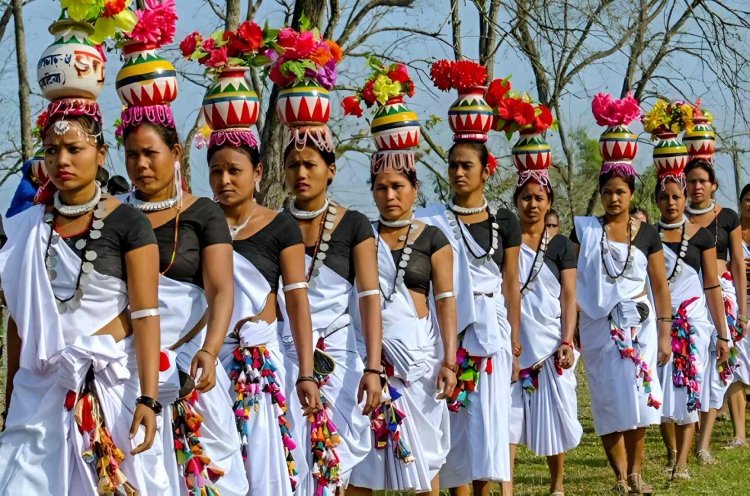
Along the green plains of Nepal’s Terai, where rivers wind through forests and rice fields stretch to the horizon, lives a community whose story is as old as the land itself. The Tharu people are one of Nepal’s most distinctive indigenous groups. They are known for their warmth, their strong sense of togetherness and a culture in which every festival, song and meal carries meaning.
Who Are the Tharu People?
The Tharu are an indigenous people of the Terai, the fertile lowland belt along the southern edge of Nepal. Communities also live across the border in northern India, mainly in Uttar Pradesh, Bihar and Uttarakhand. In Nepal they number well over a million and are among the country’s largest indigenous groups. They live in districts such as Chitwan, Dang, Bardiya, Banke, Kailali, Kanchanpur, Sunsari and Morang.
The word “Tharu” has several suggested origins. Some link it to “Sthavir,” a term connected to Buddhism, while others trace it to local words for forest dwellers. What is certain is that the Tharu have lived in these lands for a very long time, and their identity is tied to the forests, rivers and farmland of the Terai.
A Brief History of the Tharu
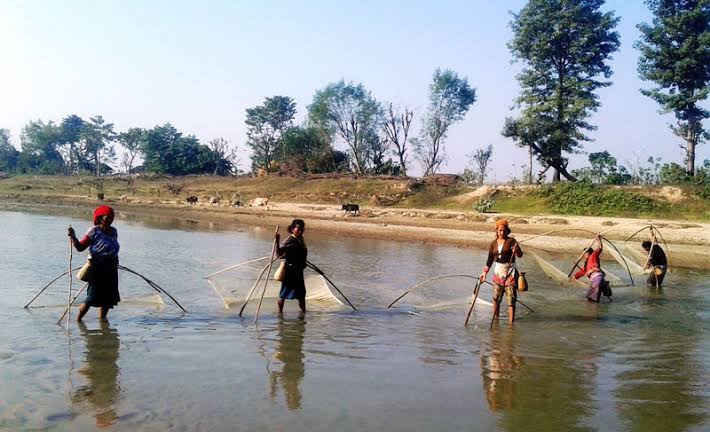
The Tharu have long been farmers, fishers, hunters and foragers. For generations they lived in the dense, malaria-ridden forests of the Terai, areas that outsiders avoided. Many researchers believe the Tharu developed unusual resilience to malaria, which allowed them to thrive where others could not. This is why they were often called the original guardians of the Terai.
Many Tharu communities hold that they descend from the Shakya clan of Buddha’s lineage, and some, such as the Rana Tharu of the far west, tell stories of ancestors who came from Rajasthan. These oral traditions show how history, legend and identity are woven together in Tharu life.
In the 1950s, a malaria eradication program opened the Terai to settlement. Many outsiders moved in, and a large amount of Tharu land passed into other hands. Many Tharu families fell into debt and bonded labor. The best-known example was the Kamaiya system, which Nepal officially abolished in 2000. A related practice, Kamlari, in which young Tharu girls were sent to work in households, was formally banned in 2013. Both ended largely because of the efforts of Tharu activists and organizations, and rebuilding lives after bondage remains an ongoing struggle.
Tharu Language and Identity
The Tharu speak Tharu, with many regional varieties, including Dangaura, Rana, Kathariya and Chitwaniya. Each reflects the land and community where it is spoken. Efforts continue to teach the language to children, publish it in print and broadcast it on local radio, so that young Tharu keep their mother tongue.
Maghi: The Tharu New Year
The most important Tharu festival is Maghi, celebrated on the first day of the month of Magh, around mid-January. For many Tharu communities it marks the new year. Families bathe in rivers, wear new clothes, share special foods and visit relatives. It is a time to settle old accounts and renew friendships.
Maghi is also a moment of community decision-making, when villages traditionally selected their leaders for the year ahead. Songs and dances fill the evenings, and the festival shows how deeply the Tharu value togetherness.
Other Festivals That Define Tharu Life
Beyond Maghi, the Tharu calendar is full of celebrations tied to agriculture, nature and family.
Attiya: A festival in which women pray for the wellbeing of their children and families. Jitiya: A day of fasting and prayer for the long life of children. Gurahi: A festival tied to the worship of village deities and nature spirits. Holi (Fagu): Celebrated with songs, dances and colors. Dashain and Tihar: Observed with local Tharu customs and rituals.
Many of these rituals are led by the Gurau (a traditional priest or healer) and a village head sometimes called the Badghar, who has long guided community affairs.
Dance, Music and Storytelling
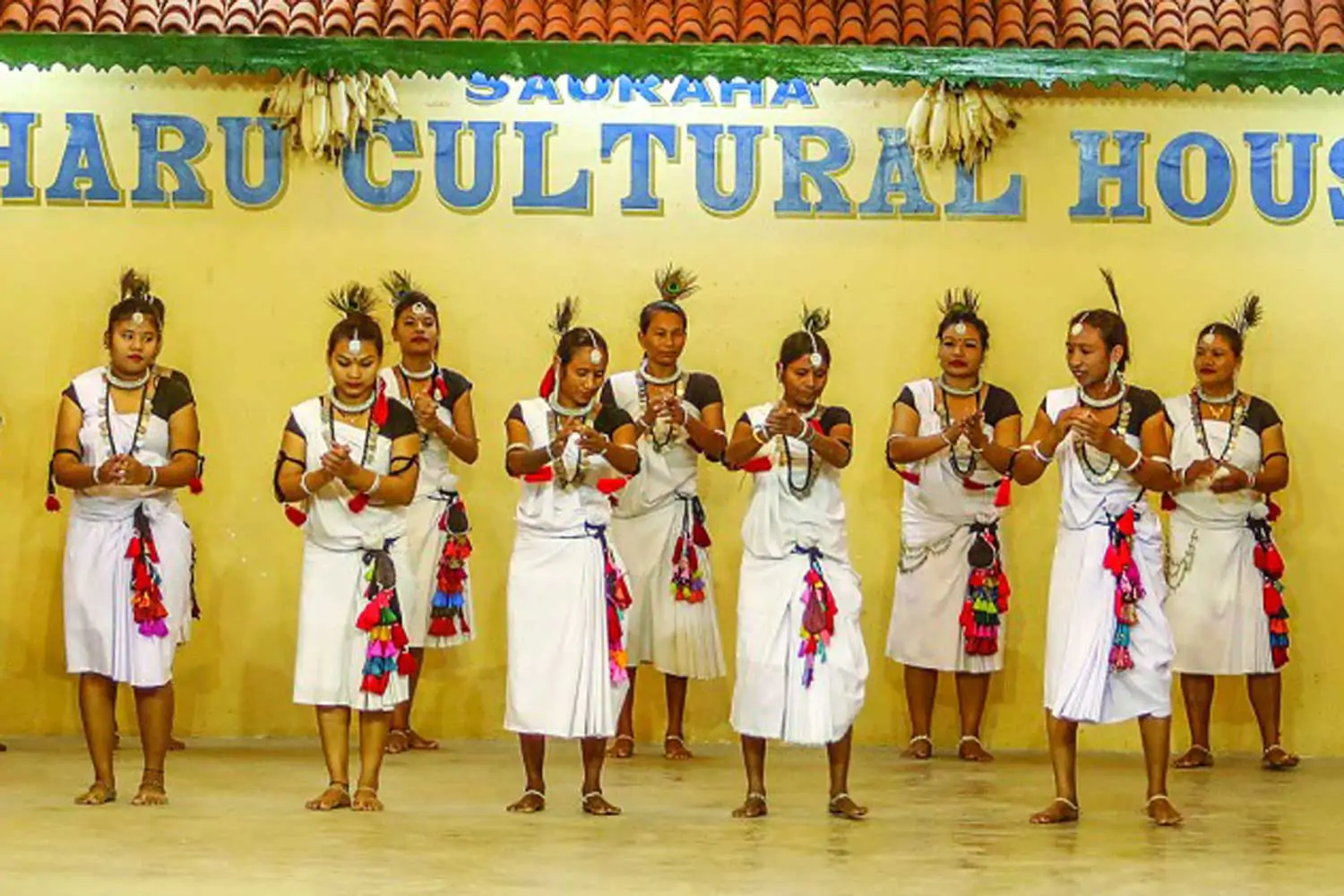
Music and dance are the heartbeat of Tharu culture. The best-known styles include the Sakhiya dance, the Lathi (stick) dance, Maghauta and Jhumra. Performers move in circles and lines, often with drums, sticks and songs that tell stories of harvests, gods, seasons and daily life.
Tharu dance is a community act rather than a performance for strangers. Everyone is welcome to join, and this open, shared spirit reflects the Tharu belief in unity.
Tharu Houses and Art
Traditional Tharu homes are built with mud, bamboo, straw and wood, and they are designed to stay cool in the hot Terai summer. The walls are often decorated with painted and carved patterns of birds, elephants, flowers and geometric shapes. Women lead this art, using natural colors and local materials.
Tharu craftspeople also make baskets (such as dhakiya), mats and decorative items from grass, bamboo and reeds. Beyond being beautiful, these crafts are examples of sustainable living that modern designers admire.
Tharu Food: Flavors of the Terai
Tharu cuisine uses local rice, river fish, vegetables and wild greens. Some favorite dishes are:
Dhikri: Steamed rice-flour dumplings, often served with chutney or curry. Ghonghi: A curry made from river snails, a Tharu specialty. Sidhara: Dried fish cooked with taro (colocasia) leaves. Fresh river fish and wild vegetables: Prepared with local spices and mustard oil.
Meals are generally shared, and guests are fed with generosity. Hospitality is a pillar of Tharu life.
Love, Family and Unity
The title of this post says it all: love, unity and tradition. Tharu society has traditionally centered on large, close-knit families, where elders are respected and decisions are made together. Women hold an important place in the household and in cultural life, and cooperation is valued more than competition.
This sense of unity shows in how villages celebrate, farm, build and solve problems as one. It is also what carried the community through the hardest chapters of its history.
Challenges and Resilience Today
The Tharu people face challenges that many indigenous communities share: land loss, migration for work, pressure on forests and the slow fading of language and customs among young people. Education, political representation and equal opportunity remain important issues.
Yet the Tharu are responding with strength. Community organizations, youth groups, cultural museums, schools and local media are working to keep the heritage alive. Tharu leaders, writers, artists and entrepreneurs are making their voices heard in Nepal and beyond.
Experiencing Tharu Culture as a Visitor
Travelers can learn about Tharu culture directly. Chitwan, Bardiya and Dang offer community homestays where visitors eat Tharu food, see traditional homes and join in dance performances. Staying with a Tharu family is one of the most authentic ways to experience Nepal beyond the usual trekking routes.
When you visit, please be respectful: ask before taking photographs, choose locally owned homestays and buy crafts directly from artisans. This way tourism supports the community instead of overshadowing it.
Why the Tharu Heritage Matters
The Tharu story is about people who lived in harmony with nature, held onto their identity through hardship and kept their festivals, songs and values alive. Their heritage is a reminder that culture is not a museum piece. It is something lived every day, passed from grandmother to child and shared at every fire and festival.
Protecting and celebrating Tharu heritage means protecting a vital part of Nepal’s identity and the diversity that makes the country so rich.